
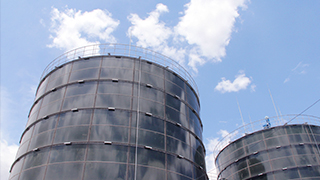

Agricultural livestock and poultry feces treatment is an important part of China's biomass energy, and biogas is an important link of agricultural waste recycling. In recent years, biogas utilization has been facing difficulties. In the first 30-40 years of biomass energy utilization in China, biogas utilization has always been treated as a public welfare undertaking supported by the state to provide clean energy for farmers.
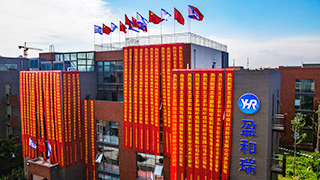
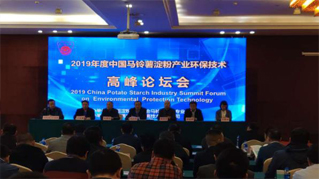
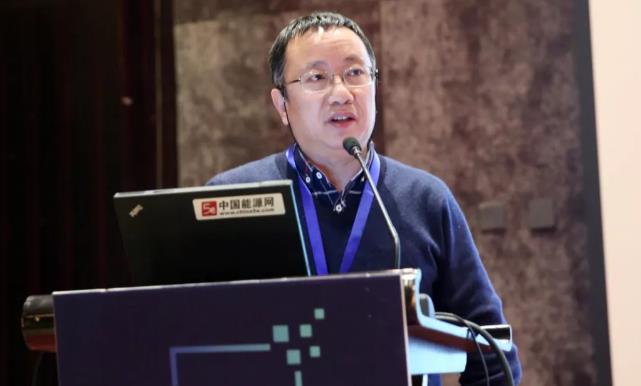
On January 12, on the “Future Energy Conference” held in Beijing, Mr. Li Xuyuan, Chairman of Beijing Yingherui Environmental Technology Co., Ltd. delivered a keynote speech themed “the Third-party Governance Model of Energy-oriented Utilization of Livestock and Poultry Feces”. By his speech, Li introduced the problems faced in the implementation of the third-party governance model of energy-oriented utilization of livestock and poultry feces and summarized the conditions for establishing a third-party governance model, providing a good reference for social capital’s entry.
According to source, before 2008, the utilization of livestock and poultry feces mainly targeted a single household. Livestock and poultry feces are used to produce biogas, and the Ministry of Agriculture needed to pay substantial subsidies every year. After 2008, until 2017, the focus has been gradually shifted to the way large-scale farms, villages and towns trade livestock and poultry feces in a centralized manner to produce biogas.
After 2017, with the transformation of rural production and lifestyle, the production mode of biogas has undergone a huge transformation, and biogas production has been transformed into a new way of utilization of agricultural wastes. It mainly focuses on the treatment of livestock and poultry feces, with biogas and organic fertilizer produced during the treatment process. Its purpose is to deal with agricultural wastes, including pig manure and straw. Due to the change in the treatment method, the state's subsidies are gradually reduced. By 2018, the state has basically ended the subsidies for biogas.
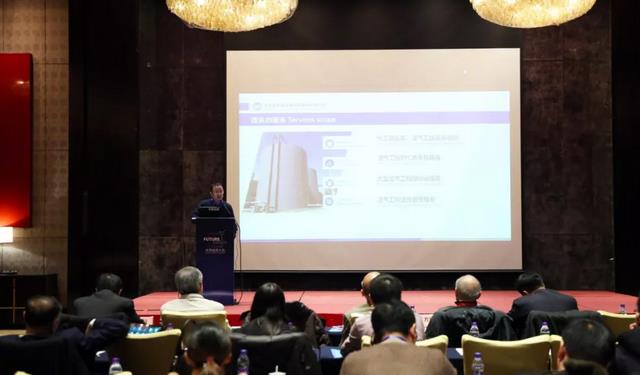
Li Xuyuan said, "The third-party governance needs to face the three major problems, namely capital recovery, regional industrial cycle chain construction and investment risk. First, the restriction on the project during the capital recovery period is reflected in the reasonable determination of the social capital entry in the payback period; Secondly, the construction of the regional industrial recycling chain is the basis for ensuring the collection of raw materials and the use of fertilizers. If there is no complete industrial chain, the third-party governance is also unable to implement; Finally, third-party governance requires capital investment, and the farm faces an unpredictable risk of disease, which will further grow into investment risk that cannot be effectively avoided. ”
Li Xuyuan mentioned that the utilization of livestock and poultry feces should also face the cost and charging problems. As far as livestock and poultry feces are concerned, farming enterprises believe that livestock and poultry feces are resources so they do not need to pay. However, the third party holds that livestock and poultry feces should be pollutant discharges and their treatment takes a certain price, so it is necessary to charge a certain fee from the body of the pollution source. At present, this contradiction still exists. Some central enterprises have a stronger sense of social responsibility and will pay according to regulations. Some private enterprises can't do it. Therefore, the government needs to strengthen supervision. The stronger the government's supervision is, the better of the conditions for third-party governance are.
As a representative of the biogas utilization industry, Li Xuyuan believed that the current market for agricultural waste utilization is very broad. Properly handling the relationship between the third-party governance and the utilization of livestock and poultry feces is believed to the right direction of the development of agricultural waste recycling and social capital will also enter this field enthusiastically.